
Sylvester Stallone on Leadership: What Happens When the Phone Stops Ringing?
What do you do when the phone stops ringing? When success disappears? When life hits harder than your confidence can take?
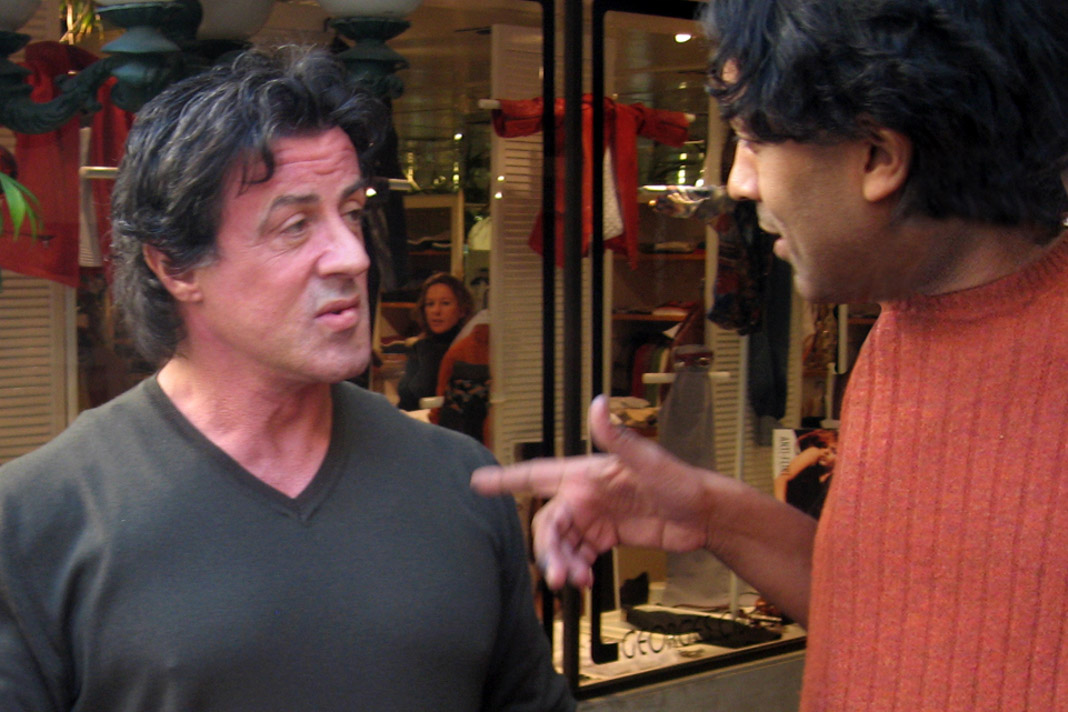
When keynote speaker, emcee and executive coach Cherno meets Hollywood icon Sylvester Stallone, their conversation turns into a masterclass in leadership, resilience, courage, and success.
Of course, they talk about Hollywood. About Rocky and Rambo. About catching the zeitgeist and understanding what really moves people. But soon, the encounter becomes about something much bigger.
How do you keep believing in yourself when the world has stopped believing in you?
Stallone knows something many successful leaders fear: spectacular success followed by rejection. Being celebrated. Being written off. And still finding a way back.
For Cherno, who today works as a strategic sparring partner for CEOs, senior executives, and boards, that is exactly what makes the encounter so powerful.
Because Sylvester Stallone’s leadership lessons are not really about Hollywood. They are about resilience, reinvention, and staying successful through change. They are about what happens when the applause stops — and you keep moving anyway.
Success Is Sexy. The Comeback Shows Who You Really Are.
Sylvester Stallone does not simply make successful movies. With Rocky and Rambo, he creates characters that become cultural icons.
How? Stallone’s answer to Cherno is surprisingly simple.
Listen!
Get out there. Immerse yourself in society. Pay attention to what people fear, what they desire, and what they struggle with. Understand the emotional undercurrent of the moment.
That instinct shapes Rocky and Rambo. Stallone also brings his feel for popular culture and the zeitgeist to Staying Alive, which he directs.
There is no secret formula for success, he explains. The real work is staying close enough to people to understand what they feel.
For leaders, that idea is more relevant today than ever. Data can tell you what is happening.
More Data? Great! Great Leaders Still Know How to Listen.
AI can identify patterns. Dashboards can measure behavior. But leadership still requires understanding why people care.
Listen Better. See Change Earlier.
Cherno takes something from his encounter with Stallone that should almost be obvious: catching the zeitgeist is not magic. It is attention.
Sylvester Stallone listens before Rocky. He listens before Rambo. And decades later, when many consider the franchise finished, he returns with Rocky Balboa.
The world has changed. The character has grown older. So has the audience. Instead of ignoring that reality, Stallone makes it part of the story.
That is more than Hollywood instinct. It is a powerful principle for leadership and transformation: Don’t fight reality. Understand it faster than everyone else. Then build from it.
The Zeitgeist Doesn’t Send a Calendar Invite.
Markets change before organizations do. Customer expectations shift before they show up in quarterly reports. Technologies move from novelty to necessity while established companies are still discussing pilot projects. That is why listening matters.
The Zeitgeist Won’t Wait for Your Strategy Either.
Leaders who recognize change early are rarely just the ones with the most information. More often, they are the ones curious enough to notice weak signals before everyone else does.
Sylvester Stallone understands something that applies to CEOs just as much as it does to storytellers: If you want to stay relevant, stay close to the people whose world is changing.
Hope Is Not a Strategy. But Without Hope, You Won’t Build a New One.
One of Stallone’s most striking statements captures his attitude toward success: “I believe any success in life is made by going into an area with a blind, furious optimism.” “Blind optimism” initially sounds like the opposite of good leadership. But perhaps the crucial word is furious.
This is not passive hope. It is optimism that creates movement. The conviction that there is still something you can do even when the outcome is uncertain. That distinction matters in business.
CEOs rarely have the luxury of complete information. Transformation begins before every question is answered. Markets move before organizations are ready. Technology changes faster than corporate structures. Waiting for certainty can therefore become a risk in itself.
Courage is not knowing that you will win. Courage is refusing to let uncertainty stop you from acting.
No Mountain in Sight? Stallone’s Answer: Build One!
Sylvester Stallone puts the principle even more provocatively: “If you don’t have a mountain, build one and then climb it. And after you climb it, build another one; otherwise, you start to flatline in your life.”
It is a remarkable image, especially for leaders who have already achieved a great deal. Because one of the greatest dangers for successful people is not failure.
Comfort Is the Real Danger.
The company is profitable. The title has been achieved. The strategy works. The organization has mastered yesterday’s business model. And that is exactly when complacency becomes dangerous.
Your greatest success can become your greatest trap.
Warning: Success! What Gets You to the Top Can Keep You Stuck There.
Past success creates confidence. It can also create inertia. The crucial question for leaders is therefore not simply: What makes us successful?
It is: What do we need to challenge today so that yesterday’s success does not become tomorrow’s weakness?
Build the next mountain.
That might mean entering a new market. Reimagining the customer experience. Transforming the organization around AI. Developing the next generation of leaders.
Or changing something about yourself that has worked brilliantly for the past ten years, but will not be enough for the next ten.
Winning Is Hard. Staying Hungry Is Harder.
Success changes people and organizations. When you are fighting your way to the top, urgency comes naturally. Once you have arrived, however, it is easy to start protecting what you have built.
Eventually, preservation can replace the hunger that created success in the first place. That is why reinvention is so difficult. It asks successful people to question the very habits, assumptions, and business models that made them successful. Yesterday’s winning formula can become tomorrow’s problem.
And Then the Phone Stops Ringing.
Then Sylvester Stallone says something that stays with Cherno, and probably with anyone who has ever been successful or creative:
“I believe an artist dies twice. The first time, it’s just terrible. I’ve been there when the phone isn’t ringing for years.”
That sentence changes the conversation. Suddenly, this is no longer about Hollywood, courage, or success. It is about identity. What happens when the world no longer validates the person you believe yourself to be?
Executives experience their own versions of that moment. The promotion does not happen. A strategy fails. The company is restructuring. Expertise that was highly valued yesterday becomes less relevant. A new technology rewrites the rules.
Suddenly, yesterday’s status offers very little protection. This is where executive resilience becomes more than a motivational buzzword.
It means being able to separate your identity from your current circumstances.
A bad chapter is not the end of the story. But someone still has to write the next one.
Resilience Begins When Nobody Is Applauding.
This philosophy becomes immortalized in Rocky Balboa:
“You, me, or nobody is gonna hit as hard as life.” The point is not avoiding the hit. It is what happens next.
Sylvester Stallone himself becomes evidence of that philosophy. His career has extraordinary highs, difficult lows, and periods when Hollywood seems to have moved on.
And then comes the comeback. That is why his message carries weight. Resilience sounds impressive when you talk about it from the top. It becomes credible when it comes from someone who has been at the bottom.
Stallone also points to people who survive extreme conditions as evidence of what human beings are actually capable of. His conclusion is simple: People are capable of extraordinary things. Often far more than they believe.
The Hit Is Coming. The Leadership Question Is: What Do You Do Next?
For Cherno, this is one of the most powerful leadership lessons from the encounter.
In times of radical change, leaders cannot guarantee that everything will work. But they can influence something else: How they respond.
Staying Down Is a Decision.
Do they become defensive? Do they protect yesterday? Do they blame circumstances? Or do they remain curious, visible, and capable of making decisions?
Resilience does not mean becoming exactly the person you were before the crisis. Sometimes resilience means becoming the person the next chapter requires.
What CEOs Can Learn from Sylvester Stallone About Reinvention
The parallels between Stallone’s career and leadership are surprisingly strong. Organizations move in cycles, just like careers. Products peak.
Markets change. Technology destroys established competitive advantages. New competitors appear from places nobody expected. And a reputation that took decades to build can suddenly become less relevant.
The first instinct is often to defend what worked. The stronger question is:
What does the next version of us need to become?
That is the essence of reinvention. Not throwing away everything that made you successful.
But understanding what must remain and having the courage to change everything else.
Executive Presence: When the Script Ends, Leadership Begins.
Sylvester Stallone’s thinking touches on another subject at the heart of Cherno’s work with senior leaders: executive presence.
“You’ve got to show your soul otherwise you’re just a piece of equipment.” It may be one of the least corporate sentences imaginable.
Which is precisely why leaders should take it seriously.
In an era of AI-generated presentations, optimized talking points, and perfectly polished corporate language, technical competence is becoming easier to replicate. Human connection is not.
People want to know what a leader believes. What matters to them. Whether they mean what they say. Whether there is actually a human being behind the title.
Executive presence is not a performance. It makes credibility visible.
The strongest leaders do not simply transmit information. They create trust.
AI Can Write Your Words. It Can’t Give You Conviction.
This may become one of the defining leadership challenges of the AI age.
Almost anyone can now produce a polished presentation. A sophisticated strategy paper. A carefully crafted CEO message.
The competitive advantage moves somewhere else. To judgment. To conviction. To personality. To the ability to make people feel that the person standing in front of them actually believes what they are saying.
Technology can amplify leadership. It cannot replace it.
From Rocky to the Boardroom: Five Rules for Leaders Who Want to Stay Relevant
Cherno takes five principles from the encounter that reach far beyond Hollywood:
-
Listen before you lead.
The zeitgeist rarely announces itself in a PowerPoint presentation. Stay close to people, customers, and culture.
-
Protect your optimism.
Reality matters. But pessimism disguised as intellectual superiority does not build the future.
-
Build the next mountain.
Success is not a reason to stop challenging yourself. On the contrary, success gives you the opportunity to challenge yourself even more.
-
Don’t confuse rejection with irrelevance.
The phone may stop ringing. Markets may change. Careers may stall. The next chapter can still become the defining one.
-
Let people see the human being behind the role.
Competence earns respect. Authenticity and executive presence create connection.
Nobody Writes Your Reinvention for You.
Meeting Sylvester Stallone impresses Cherno not simply because he meets one of Hollywood’s most recognizable stars.
It is because behind the mythology, something far more valuable appears: A man who knows success. And failure. And success again.
That cycle contains an important lesson for anyone leading through uncertainty.
Hope does not mean waiting for circumstances to get better.
Hope means maintaining enough belief to act before you know how the story ends.
Courage does not mean avoiding the hit. Courage means moving forward after it.
And success? Perhaps success is less about conquering one mountain than maintaining the hunger to find the next one.
Another Motivational Speech? Please Don’t. Your Organization Needs Momentum.
Today, Cherno brings experience from many years in journalism, television, international stages, and encounters with some of the world’s most influential leaders, entrepreneurs, artists, and decision-makers into his work as an international keynote speaker, executive coach, and strategic sparring partner for CEOs and boards.
His focus: helping leaders communicate with greater impact, strengthen their executive presence, navigate transformation and uncertainty, and turn complexity into action.
Because in business, just as in Sylvester Stallone’s story, the decisive question is rarely whether life, or the market, will hit.
The decisive question is what you do next.
Your Next Mountain Won’t Wait.
If your leadership team is facing transformation, disruption, AI-driven change, or uncertainty, yesterday’s answers may no longer be enough.
Bring a different kind of conversation into the room.
Book Cherno for a keynote, executive coaching, or a strategic leadership session, and turn uncertainty into the starting point for your next move.