
What George Soros Taught Cherno About Succeeding in Times of Radical Change
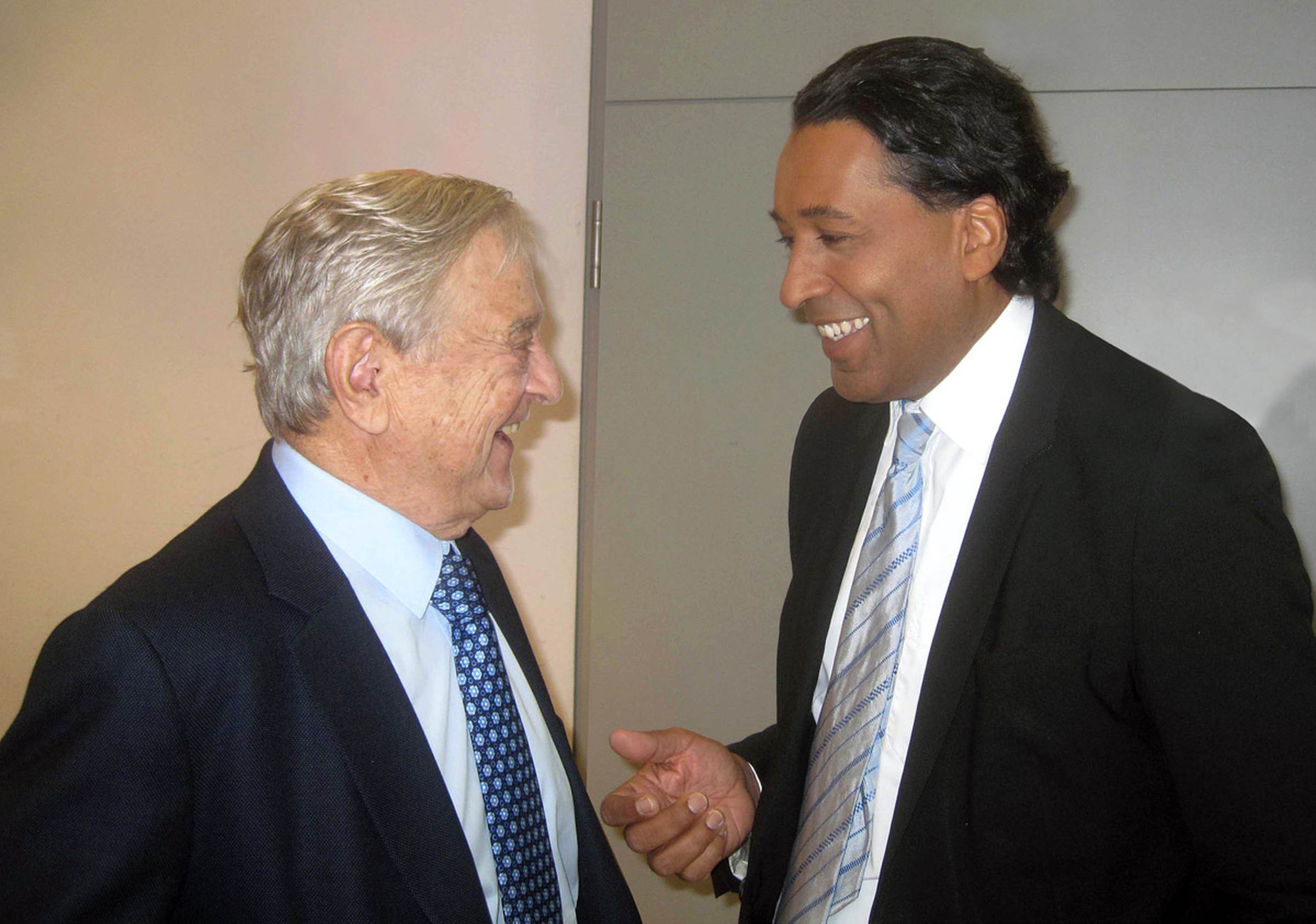
A conversation about markets and morality, freedom, and responsibility, and perhaps the most important skill of successful leaders: the courage to change their minds.
Some people read markets. Others change them.
When Cherno meets investor and philanthropist George Soros, he encounters a man who made billions in the financial markets and devoted a significant share of his wealth to supporting open societies, education, and human rights.
George Soros became famous worldwide after shorting the British pound in the early 1990s. His philanthropic work later turned him into a target for powerful political forces.
But beyond the headlines, Cherno discovers a man whose thinking extends far beyond money, markets, and power.
If You Always Have to Be Right, You Will Make the Wrong Decisions
How do you remain successful in times of radical change? The conversation explores the limits of human knowledge, the productive power of uncertainty, and a question confronting every CEO, board member, and decision-maker today:
How do you make smart decisions when no one can reliably predict the future? Soros’ answer is as simple as it is uncomfortable: Success does not belong to those who are always right. It belongs to those who recognize early enough that they are wrong—and act decisively.
The Most Dangerous Sentence in Business: “I Know How This Works”
George Soros did not build his fortune because he could predict the future perfectly. He built it because he knew that he could not. “I’m only rich because I know when I’m wrong,” Soros says.
Cherno has to smile. The sentence contradicts one of the most persistent myths of modern leadership: the belief that authority comes from projecting certainty at all times.
Decision-makers often hide their doubts. In boardrooms, strategies are defended long after the assumptions behind them have stopped being true. Leaders cling to decisions because changing courses might look like weakness. But in times of radical change, the opposite is true.
Being Wrong Does Not Endanger a Company. Refusing to Correct the Mistake Does.
Soros puts it this way: “Once we realize that imperfect understanding is the human condition, there is no shame in being wrong, only in failing to correct our mistakes.”
This is more than an investment insight. It is a leadership principle. True authority does not come from pretending to be infallible. It comes from repeatedly testing your position against reality.
Future Does Not Reward the Most Certain. It Rewards the Most Adaptable.
“Markets are constantly in a state of uncertainty and flux,” Soros explains, “and money is made by discounting the obvious and betting on the unexpected.” That does not mean blindly betting against the consensus. It means looking more closely. Which assumptions does everyone take for granted? Which changes are being underestimated? Which signals no longer fit the prevailing narrative?
And what happens when supposed certainty turns out to be an illusion? Soros recalls an old Wall Street joke: The stock market has predicted seven of the last two recessions.
Markets Are Powerful. But They Are Not All-Knowing.
Markets reflect expectations, fears, interests, and miscalculations. They tend to amplify trends, influence sentiment, and shape decisions. But they do not provide an objective map of the future.
For leaders, this distinction is critical. Data is indispensable. Forecasts are useful. Artificial intelligence can identify patterns that human beings miss. But no dashboard can take responsibility for a decision.
Technology Can Reduce Uncertainty. It Cannot Eliminate It.
Leading in times of radical change requires more than information. It requires judgment. The ability to live with contradictions. And the courage to revise a decision before reality forces you to do so.
The Greater the Crisis, the Greater the Strategic Window
One of Soros’ most provocative ideas is this: “The worse a situation becomes, the less it takes to turn it around, and the bigger the upside.”
This is not naive optimism. It is strategic realism. Crises destroy certainty. But they also break through resistance.
What seemed unthinkable yesterday may become unavoidable tomorrow. Old business models lose their legitimacy. New alliances emerge. Decisions postponed for years are suddenly made within days.
Disruption does more than eliminate security. It creates movement. And for companies, that movement can create opportunities.
While Everyone Else Is Trying to Save the Old World, the Bold Are Already Building the Next One.
That requires looking at a crisis differently. Not merely as a threat to what already exists, but as a moment in which change becomes politically, economically, and psychologically possible.
The decisive question is not only: What could we lose?
It is also: What is becoming possible now that seemed impossible before?
Markets Can Determine Prices. But They Cannot Determine Values.
George Soros defends markets as one of society’s great inventions. They enable people to pursue their economic interests, meet private needs, and generate profit.
But he draws a clear line: “Markets are designed to allow individuals to look after their private needs and to pursue profit. It’s really a great invention, and I wouldn’t underestimate the value of that, but they’re not designed to take care of social needs.” For companies, this distinction has never been more important.
Profit Is an Outcome. Responsibility Is a Decision.
The market can reveal what people are willing to buy. But it cannot automatically determine what is responsible. It can be a reward for efficiency. But it cannot decide which social consequences are acceptable. It can generate growth. But it cannot guarantee fairness or social cohesion.
Not everything that is profitable is right. And not everything that is right pays off immediately.
For CEOs and boards, this creates a new leadership responsibility. They cannot treat commercial performance and social responsibility as opposing forces. They must consider them together.
Trust, legitimacy, and reputation are no longer soft factors. They shape customer decisions, employee retention, regulation, access to capital, and long-term enterprise value.
Competition Needs Boundaries Before It Crosses Them
“Unrestrained competition can drive people into actions that they would otherwise regret,” Soros warns. It is a remarkably timely message.
Competition creates momentum. It accelerates innovation. It forces organizations to improve. But competition without rules can intensify harmful incentives.
When only short-term results matter, risks are ignored.
When speed becomes the only standard, diligence suffers.
When growth is used to justify every decision, responsibility becomes a communications exercise conducted after the damage is done.
Those Who Set No Boundaries Will Be Overtaken by the Consequences
George Soros points to the nineteenth century, when a largely unregulated economy produced one crisis after another. Each crisis eventually led to reform. This, he argues, is how modern central banking developed.
The lesson is clear: Systems do not always correct themselves.
Sometimes people must correct the rules by which those systems operate.
Today, that applies not only to financial markets, but also to artificial intelligence, digital platforms, social media, and global supply chains.
The central leadership question is therefore not simply: What is technologically possible? It is also: What happens when everyone does what technology makes possible?
Freedom Only Works When It Comes with Responsibility
Soros’ commitment to society grew out of deeply personal experience. When asked what has driven him for so many decades despite fierce opposition, he smiles. It is the desire for a community “in which people like me can live in freedom without being hunted to death.”
Suddenly, abstract ideas become lived experience.
For Soros, freedom is not a theoretical concept. It is the opposite of persecution, oppression, and fear. He describes an open society as one that gives its members the greatest possible freedom to pursue their interests, provided that this freedom remains compatible with the interests of others.
This is not freedom without limits. It is freedom with responsibility. The freedom to develop as an individual without destroying the rights of others. Competition without undermining social cohesion. And power that remains open to criticism. “A full and fair discussion is essential to democracy,” Soros says.
The same principle applies to companies.
Organizations in which no one is allowed to disagree may appear united from the outside. But internally, they become blind.
The quality of a leadership culture is not revealed by how harmoniously everyone agrees. It is revealed by how openly uncomfortable truths can be discussed.
When You Suppress Dissent, You Disable Your Early-Warning Systems
For Cherno, this creates a direct connection between the open society and modern corporate leadership.
CEOs need people who do more than validate their thinking. They need people who test it. Boards need spaces in which doubts can be voiced before they turn into crises. Organizations need cultures in which correcting a mistake is seen as a strength, not a loss of face.
CEOs Don’t Need Yes-Men. They Need Smart Challengers.
It should be standard practice to ask the questions that no one inside the organization is asking anymore:
- Which assumption are we treating as fact?
- Which development are we refusing to see?
- Where are we confusing confidence with certainty?
- Which risk is being created by our own success?
- What should we correct today so that we do not regret it tomorrow?
Science Seeks Truth. Alchemy Seeks the Desired Effect.
George Soros distinguishes between scientific thinking and alchemy: “Scientific method seeks to understand things as they are, while alchemy seeks to bring about a desired state of affairs. To put it another way, the primary objective of science is truth, that of alchemy, operational success.”
Data Provides Direction. But It Does Not Take Responsibility.
This distinction exposes a sensitive weakness in modern leadership. How often is data genuinely used to test an assumption?
And how often is it selectively chosen to justify a decision that has already been made?
How often is a strategy the result of open analysis?
And how often is it merely an elegant presentation of what senior leadership intended to do all along?
If You Only Look for Evidence Supporting Your Plan, You Do Not Have a Strategy.
Anyone who only seeks confirmation is not practicing strategy. They are managing the intellectual risk to their own ego. Successful decision-makers separate what they want to be true from what is actually true.
They do not ask only: How can we make this initiative succeed?
They first ask: Is our assessment correct in the first place?
They do not search exclusively for arguments supporting their plan. They deliberately seek information that could disprove it.
That does not weaken decisions. It makes them more resilient.
Not Everything That Matters Fits on a Dashboard
Soros points out how difficult it is to measure social impact. Different people respond in different ways. Causes and consequences overlap. A clear and reliable measure of success can be almost impossible to define.
That is an important warning in an age in which almost everything appears measurable.
Not every meaningful effect immediately appears in a metric.
Not every problem can be captured by a KPI.
And not every decision that looks successful in the short term will remain successful in the long term.
This applies to social reform just as much as it applies to corporate strategies, transformation programs, and cultural change.
What Is Easy to Measure Is Not Automatically What Matters Most.
Leaders must learn to take numbers seriously without hiding behind them. They need measurement. But they also need judgment.
Status Quo Has Winners, They Rarely Stand in the Spotlight
George Soros also provokes by examining established political positions through the consequences they actually produce.
He once asked who benefits most from keeping marijuana illegal. His answer: major criminal organizations that earn billions from illegal trade and would rapidly lose their competitive advantage if marijuana became a legal commodity.
Regardless of one’s position on legalization, the strategic thinking behind the question is striking.
Judge Rules Not by Their Intentions, but by Who Benefits from Them
This question is equally powerful in business. Who really benefits from an existing process? Which structures protect the company. And which merely protects individual interests? Which rules solve problems, and which keep those problems artificially alive? Which supposed safeguard is preventing innovation?
Strategic clarity often begins when leaders stop looking only at the official justification for a system and start examining the incentives it actually creates.
Changing Your Mind Is Not a Loss of Face. It Is Leadership.
What stays with Cherno after meeting George Soros? Not the billions. Not the famous bet against the British pound. Not the controversies that still surround his name.
It is his intellectual agility. His refusal to confuse convictions with identity. His recognition that every human being can understand the world only imperfectly. And his courage to turn that limitation into a method rather than a weakness.
Success Begins Where the Ego Makes Room for Reality
Soros: “Although we cannot rid ourselves of misconceptions, we can correct them when we become aware of them.” This may be his most powerful lesson for life, career, and business: You do not have to be right all the time. But you must be willing to move closer to the truth.
In life, that means allowing your sense of self to evolve.
In your career, it means recognizing that yesterday’s success does not guarantee tomorrow’s relevance.
For companies, it means treating every strategy as a hypothesis that must prove itself against a changing reality.
And in leadership, it means understanding that correcting your position is not a loss of authority.
It is evidence of maturity.
Five Lessons for Leaders Who Refuse to Fall Behind
- Treat Every Strategy as a Testable Assumption
What works today may become a liability tomorrow. Successful leaders do not instinctively defend the plan. They continuously test the reality behind it. - Build the Ability to Self-Correct into Your Organization
Companies need early-warning systems, open debate, and people who are allowed to disagree. Silence is not agreement. Often, it is a sign of fear. - Look for the New Strategic Space Created by a Crisis
The greater the disruption, the faster old barriers can lose their power. Leaders who focus only on stabilization may miss the opportunity to reposition the organization. - Do Not Confuse Market Value with Social Value
Markets are powerful. But they do not automatically solve social, ethical, or political problems. Responsibility remains a leadership task. - Turn Uncertainty into a Strategic Advantage
Those who deny uncertainty will be surprised by it. Those who accept it can develop scenarios, recognize risks earlier, and act more decisively.
The Future Does Not Belong to the Infallible. It Belongs to Those Who Can Self-Correct.
In stable times, certainty can look like leadership strength. In times of disruption, it becomes dangerous. Artificial intelligence is transforming business models. Geopolitical conflict is reshaping markets. Social expectations are rising. Certainties are losing their shelf life.
Under these conditions, experience alone is no longer enough. Experience can provide direction. But it can also become a trap when it persuades leaders that the future must follow the rules of the past.
George Soros demonstrates a different kind of strength: Observe. Question. Test. Correct. Act.
The meeting impresses Cherno because Soros does not describe success as the triumph of certainty. He describes it as the result of intellectual openness. The best leaders are not those who never make mistakes. They are those who recognize their mistakes before others have to pay the price.